One of the most common complaints I hear from business owners is that they don't have enough money to market their businesses effectively.
They see competitors advertising on television, showing up in Google searches, posting constantly on social media, sponsoring community events, and appearing on billboards around town. Naturally, they feel like they need to be doing all those things too. And that's often where the trouble starts.
A business with a limited budget begins dividing its resources among as many opportunities as possible. A little goes toward Google Ads. A little toward Facebook. Maybe they add a billboard, sponsor an event, or experiment with streaming television. Before long, they're advertising in six different places but investing so little in each that their message rarely reaches the same potential customers often enough to make an impression.
There's a significant difference between reaching a lot of people and reaching people who are actually likely to become customers. And there's an equally important difference between someone seeing your advertising once and seeing it enough times to remember you when they need what you sell.
Your marketing budget may not be too small. It may simply be spread too thin.
Reach, Frequency, and a Pizza Jingle I Can't Forget
When I studied advertising at Kansas State University, one of the foundational concepts we learned was the relationship between reach and frequency.
Reach is how many different people see your advertising. Frequency is how often those people encounter it. Both matter. Reach introduces your business to potential customers. Frequency reinforces recognition and helps keep your business in consideration when someone needs your services.
But frequency has always fascinated me because of how deeply advertising can become embedded in our memories.
I left Manhattan, Kansas, 27 years ago. Yet to this day, I can tell you the telephone number for Pizza Shuttle, a local pizza restaurant. "7-7-6-5-5-7-7, call us now, Pizza Shuttle!" I can still hear that jingle in my head. Twenty-seven years later.
I haven't needed that telephone number in decades. Yet somewhere in my subconscious, that little piece of advertising has survived thousands of other messages. That's the power of frequency combined with memorable creative.
Repetition alone doesn't guarantee success, however. Show someone a bad advertisement a hundred times and you may accomplish nothing except annoying them. Additional exposures eventually offer diminishing returns. The objective is to reach the largest realistically addressable audience while maintaining enough frequency to be remembered, not simply to maximize impressions or bombard the same people.
The Problem With Drawing a Circle on a Map
One of the most common mistakes I see in local advertising is how businesses define their geographic markets. It's especially prevalent in healthcare, retail, restaurants, and home services.
A business opens a location, looks at a map, and draws a circle around it. Maybe five miles. Maybe ten. Everyone inside the circle becomes a potential customer. On paper, it makes sense. But geographic proximity and consumer willingness to travel are two different things.
I've spent considerable time working with location-based marketing, particularly in healthcare. Someone living three miles from your business may be less likely to visit than someone living eight miles away. People don't travel as the crow flies. They travel along roads, through neighborhoods, around traffic, and within established routines.
More importantly, they make decisions based on psychological boundaries that aren't visible on a map. I think of these as metaphorical walls: a major highway, a railroad crossing, an inconvenient intersection, or simply a neighborhood people don't particularly want to visit. Sometimes it's nothing more complicated than habit or laziness. And sometimes people are just strange.
The Bridge Nobody Wanted to Cross
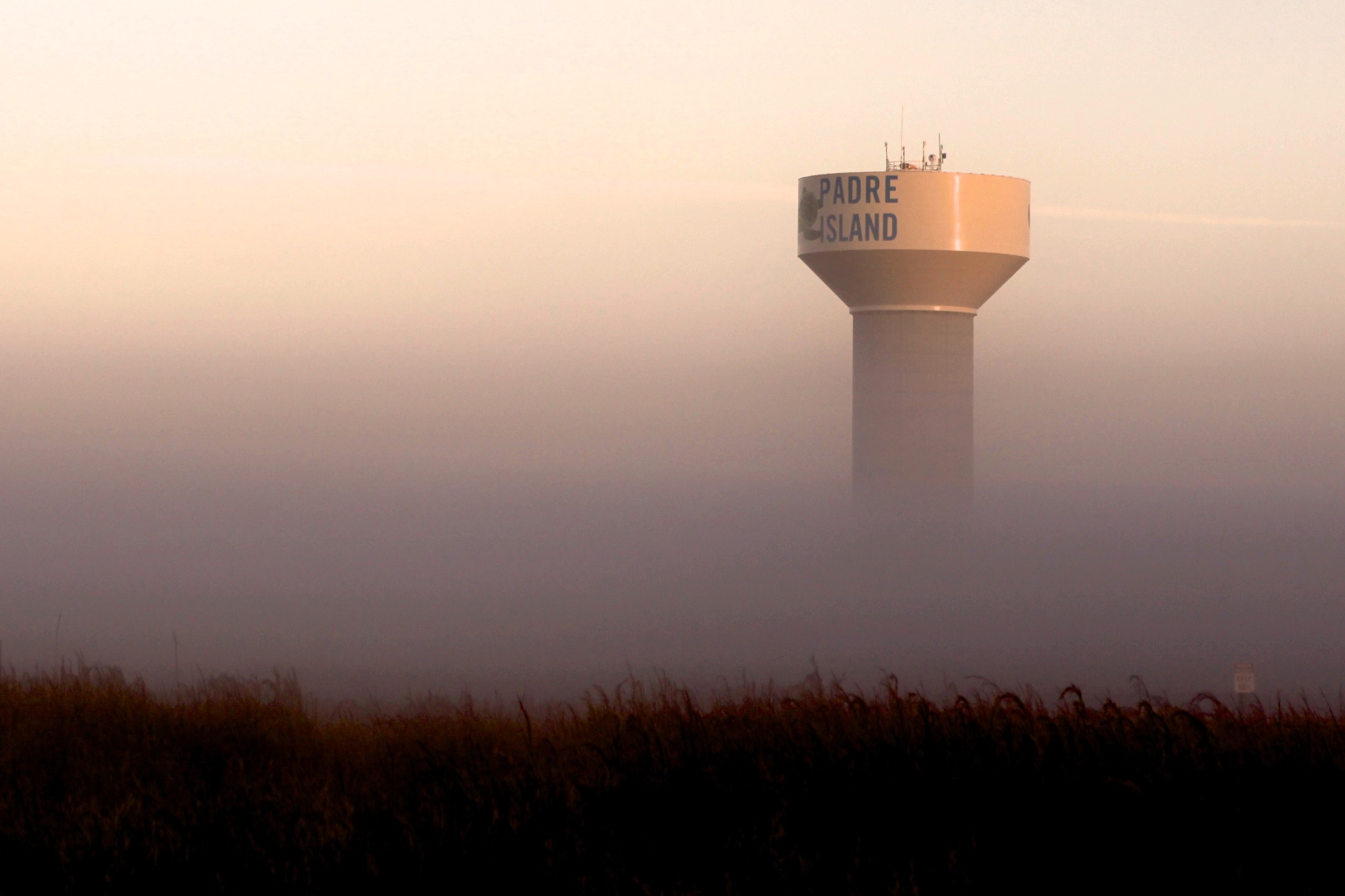
When I lived on North Padre Island in Corpus Christi, Texas, we had a phenomenon affectionately known as not wanting to go OTB. OTB stood for "Over the Bridge."
The bridge in question was the JFK Causeway, a roughly four-and-a-half-mile connection across the Laguna Madre consisting largely of low-lying roadway and causeway with an elevated bridge section. It connected our island community to the rest of Corpus Christi. Under normal conditions, it wasn't a particularly difficult trip. But to many island residents, it might as well have been an international border.
People went to extraordinary lengths to avoid going OTB. On the mainland, there was an H-E-B grocery store and a large Walmart offering far more selection and often better prices. But island residents would routinely pay more for the convenience of staying on the island.
When Island Market IGA eventually opened, residents finally had a more substantial neighborhood grocery option, even if it didn't offer the selection of larger mainland stores. Before that, there was a Dollar General. And before that, people made do with what they could find at the local Stripes convenience store.
I've often wondered whether that Dollar General was among the company's highest-grossing stores. I've never seen figures supporting it, but knowing how strongly island residents resisted going OTB, it wouldn't surprise me.
People willingly paid higher prices, accepted fewer choices, and made multiple stops just to avoid crossing a perfectly accessible causeway.
Think about that from an advertising perspective. An advertiser could draw a ten-mile circle around a mainland business and conclude that island residents were viable customers. Geographically, they'd be correct. Behaviorally, they'd be missing something fundamental.
The problem wasn't distance. It was convenience, habit, perception, and lifestyle. That bridge represented a psychological boundary that mattered far more than the mileage suggested. Those same invisible walls exist in virtually every community.
People Are Predictably Irrational
One of the most influential books I've read about human decision-making is Predictably Irrational: The Hidden Forces That Shape Our Decisions, by behavioral economist Dan Ariely. It explores how people routinely make decisions that don't fit traditional assumptions about rational behavior. We are influenced by convenience, expectations, comparisons, emotions, and other factors that don't always make logical sense. Yet those influences can make behavior surprisingly predictable.
The Padre Island residents paying more for groceries to avoid a short drive weren't necessarily making the most economical decision. But their behavior was predictable.
Consider another Corpus Christi example: Whataburger. Whataburger began in Corpus Christi in 1950, and its official directory lists approximately two dozen city locations today. When I lived there, I was struck by how conveniently those restaurants seemed positioned throughout the community. Along major roads, there frequently seemed to be a location that didn't require a long detour, or another on the opposite side of the highway.
I don't know Whataburger's internal site-selection strategy. But whether the pattern was deliberately designed or evolved through market experience, the customer-facing result was clear: convenience.
Someone heading home from work didn't necessarily have to cross lanes of traffic or drive to the next turnaround. Another Whataburger might be easier to reach. People may love your product, but that doesn't mean they're willing to inconvenience themselves to buy it. The brand's widespread presence also created familiarity. You saw it again and again as part of the everyday landscape.
What College Sidewalks Taught Me About Marketing
When I was in college, I remember learning about how the university approached planning sidewalks. Rather than deciding where they should go solely based on the shortest distance between buildings, planners paid attention to where students were already walking.
Students created informal trails through grass, often called cowpaths or desire paths, because they had already figured out their most convenient routes. The university could use those naturally occurring paths to determine where sidewalks would actually be used instead of forcing people to take routes that simply looked good on a drawing.
I've always thought that was a brilliant approach, and I've carried it into my thinking about marketing: Don't build the sidewalk where you want people to walk. Build it where they're already walking.
Too many businesses define their target audience by where customers should come from. But what if people willingly travel twelve miles along one corridor and won't go four miles in another direction? What if your true customer footprint looks nothing like a circle? That's where marketing becomes much more interesting, and potentially much more effective.
Let Your Customers Show You Where to Advertise
Instead of beginning with a radius, I prefer to begin with behavior. Where do customers actually come from? Not where you think they should come from. Where do they really come from?
Businesses may already possess the evidence: customer addresses, ZIP codes, transaction histories, appointment records, and service locations. Examining patterns over six months, a year, or several years can reveal the natural geographic footprint of a business. You'll identify neighborhoods that consistently produce customers, corridors people willingly travel, and nearby areas that rarely contribute business.
For multi-location operations, the differences can be remarkable. Two locations just a few miles apart may attract customers from substantially different areas. Treating them as identical circles ignores how customers actually behave.
In sensitive industries such as healthcare, analysis must respect applicable privacy requirements, including HIPAA. Geographic strategy can be informed by internal customer information without sharing identifiable patient data with advertising platforms.
But there's a caution: where your customers come from today isn't necessarily everywhere future customers could come from. If you historically advertised primarily in one part of town, that may partly explain why existing customers come from there.
I think about markets in three categories: areas with demonstrated customer demand, promising areas that deserve measured testing, and lower-priority areas with limited potential or substantial barriers. Expansion should be intentional, not accidental.
Sometimes the Best Marketing Decision Is Where Not to Advertise
We're conditioned to think successful marketing means more markets, more platforms, more impressions, more people. But with a fixed budget, each dollar spent on one audience is unavailable for another. That makes exclusion just as important as inclusion.
Imagine advertising across a ten-mile radius reaching 80,000 people. After studying customer behavior, you discover that most of your customers originate from a few neighborhoods and travel corridors containing only 30,000 residents. That doesn't make the other 50,000 worthless. But why allocate equal resources to areas that rarely produce customers and those with demonstrated demand?
Reduce low-potential spending and you may free up money for more meaningful exposure among promising audiences. You're not necessarily spending less. You're making the money work harder. Keep some resources available to test new audiences and challenge your assumptions.
Stop Trying to Advertise Everywhere
Geography is only part of the problem. The same tendency to spread resources too thin occurs when choosing advertising channels. Google Ads, Facebook, Instagram, YouTube, streaming television, radio, billboards, direct mail, sponsorships: every platform offers a compelling reason to be there.
But diversification without sufficient investment can become fragmentation. If the budget is divided among eight channels and none has enough support to meet its objective, you haven't created a comprehensive strategy. You've created eight underfunded campaigns.
The better question isn't "How many places can we advertise?" It's "Which combination of channels gives us the best opportunity to reach qualified customers often enough to matter?"
For one business, that might mean Google Search and streaming television. For another, social media and outdoor advertising. For a business-to-business company, it might be trade shows, direct outreach, and coordinated follow-up. Timing also matters. Seasonal peaks, severe weather, budgeting cycles, and moments of customer need can all change the value of an advertising dollar.
Ubiquity Doesn't Mean Advertising Everywhere
One concept I've developed is what I call Ubiquity Marketing. Ubiquity describes something that seems to be everywhere, and that perception can be powerful.
Think about a business you continually encounter: online, in the community, at industry events, and in search results. Eventually it feels established and familiar. It seems like it's everywhere. But you don't have to advertise everywhere to create the perception of being everywhere. You have to be visible in the places that matter to your intended audience.
Whataburger's Corpus Christi presence illustrates the concept physically. Pizza Shuttle demonstrates what repeated, memorable messaging can accomplish. The opportunity is to combine those principles: understand where customers travel, how they decide, what media they use, and when they're most likely to need your services. Then coordinate exposure around those touchpoints.
Data helps identify the opportunities. Creativity helps make them memorable. As I like to think of it, data tells us where to build the sidewalk. Creativity gives people a reason to take the walk. Strategy makes sure the entire effort leads somewhere worthwhile.
Build Sidewalks Where People Actually Walk
I keep coming back to those college sidewalks, that bridge in Corpus Christi, and the Pizza Shuttle jingle because they illustrate something fundamental: people don't always behave the way we think they should.
They'll pay more to avoid crossing a bridge, choose a restaurant because it's on the convenient side of the highway, and remember a jingle nearly three decades after they needed the number.
Marketing becomes more effective when we stop assuming how customers should behave and begin studying how they actually behave. Are you reaching the right people? Enough of them to grow? Often enough to be remembered without excessive repetition? Are you advertising where they travel and when your message matters most?
Or are you paying to build sidewalks through fields where nobody walks?
Your marketing budget may not be too small. You may simply be trying to build too many sidewalks, including a few across bridges your customers have no intention of crossing.